Kingdom: Plantae

Order: Poales

Family: Poaceae

Subfamily: Panicoideae

Genus: Saccharum

Species: S. officinarum

ABOUT SUGARCANE

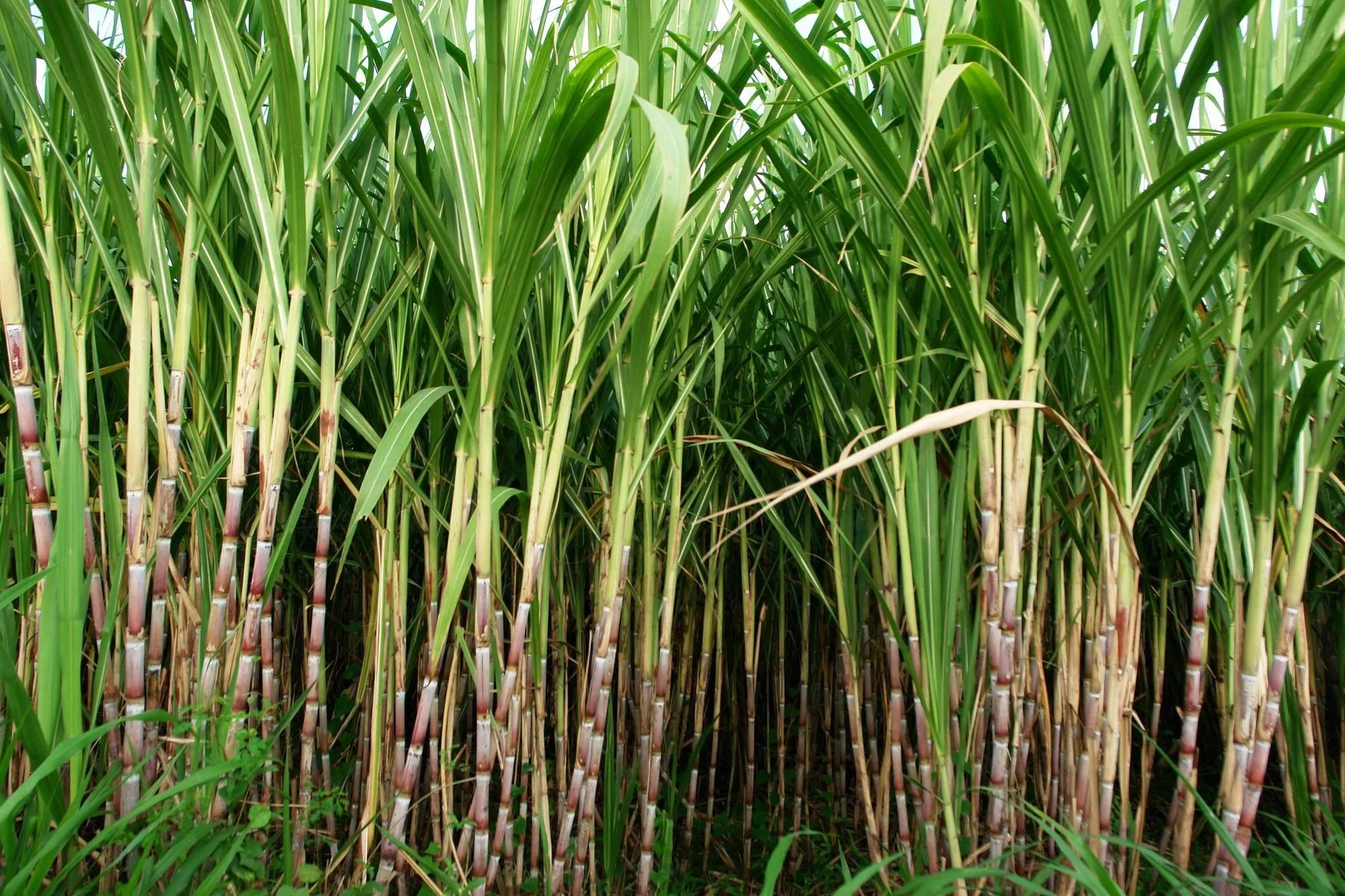
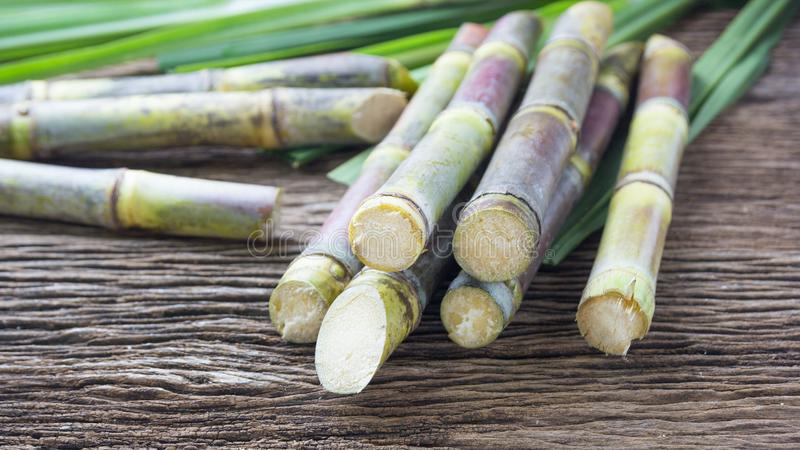
Sugarcane (Saccharum officinarum) family Gramineae (Poaceae) is widely grown crop in India. It provides employment to over a million people directly or indirectly besides contributing significantly to the national exchequer. Sugarcane growing countries of the world lay between the latitude 36.7° north and 31.0° south of the equator extending from tropical to subtropical zones. Sugar cane originated in New Guinea where it has been known for thousands of years. Sugar cane plants spread along human migration routes to Asia and the Indian subcontinent. Here it cross-bred with some wild sugar cane relatives to produce the commercial sugar cane we know today.

Cultivation of sugarcane in India dates back to the Vedic period. The earliest mention of sugarcane cultivation is found in Indian writings of the period 1400 to 1000 B.C. It is now widely accepted that India is the original home of Saccharum species. Saccharum barberi and Polynesian group of island especially New Guinea is the centre of origin of S. officinarum. It belongs to family Gramineae (Poaceae), class monocotyledons and order glumaceae sub family panicoidae, tribe Andripogoneae and sub tribe saccharininea. The cultivated canes belong to two main groups: (a) thin, hardy north Indian types S.barberi and S.Sinense and (b) thick, juicy noble canes Saccharum officinarum. Highly prized cane is S. officinarum.

Important regions/ zones for sugarcane cultivation in India

Broadly there are two distinct agro-climatic regions of sugarcane cultivation in India, viz., tropical and subtropical. However, five agro-climatic zones have been identified mainly for the purpose of varietal development. They are (i)North Western Zone (ii) North Central Zone (iii) North Eastern Zone (iv) Peninsular Zone (v) Coastal Zone.Tropical region Shared about 45% and 55% of the total sugarcane area and production in the country, respectively along with the average productivity of 77 t/ha (2011-12). Sub-tropical region accounted for about 55% and 45% of total area and production of sugarcane with an average productivity about 63 t/ha (2011-12)
GROWTH STAGES OF SUGARCANE

CLIMATE REQUIREMENT

Temperature for different critical stages of sugarcane: The different critical stages are germination, tillering, early growth, active growth and elongation. Optimum temperature for sprouting (germination) of stem cuttings is 32° to 38°c. It slows down below 25°, reaches plateau between 30° - 34°. Temperatures above 38° reduce the rate of photosynthesis and increase respiration. For ripening, however, relatively low temperatures in the range of 12° to 14° are desirable.

Reduction in yield of sugarcane due to rise in temperature

The sugarcane productivity and juice quality are profoundly influenced by weather conditions prevailing during the various crop-growth sub-periods. Sugar recovery is highest when the weather is dry with low humidity; bright sunshine hours, cooler nights with wide diurnal variations and very little rainfall during ripening period. These conditions favour high sugar accumulation. The climatic conditions like very high temperature or very low temperature deteriorate the juice quality and thus affecting the sugar quality. Favourable climate like warm and humid climate favour the insect pests and diseases, which cause much damage to the quality and yield of its juice and finally sucrose contents.

SOIL

Sugarcane is a tropical as well as a subtropical crop. It grows well in hot and humid climate with a temperature of 21 o C − 27 o C and an annual rainfall between 75 cm and 100 cm. It can be grown in a variety of soils and needs manual labour from sowing to harvesting. India is the second largest producer of sugarcane only after Brazil. It is the main source of sugar, gur (jaggery), khandsari and molasses. The major sugarcane producing states are Uttar Pradesh, Maharashtra, Karnataka, Tamil Nadu, Andhra Pradesh, Bihar, Punjab and Haryana.

RED ROT

Disease Symptoms:

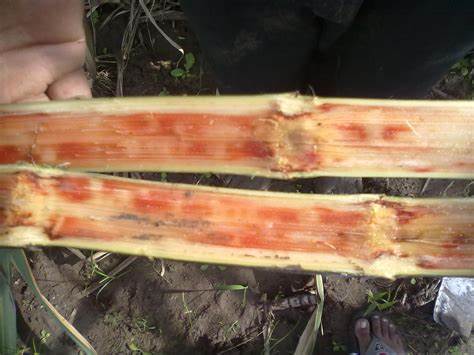
The spindle leaves (3rd & 14th) display drying. At a later stage, stalks become discoloured and hollow. Acervuli (black fruiting bodies) develop on rind and nodes. After splitting open the diseased stalk, a sour smell emanates. The internal tissues are reddened with intermingled transverse white spots.

WILT

Disease Symptoms:

Typical wilt symptoms appear during monsoon and post monsoon periods. Affected plant appears wilted and conspicuously stunted. The crown leaves turn yellow, loose turgor and eventually withers. Wilt-affected canes loose their normal colour and are light in weight.

GRASSY SHOOT

Disease Symptoms:

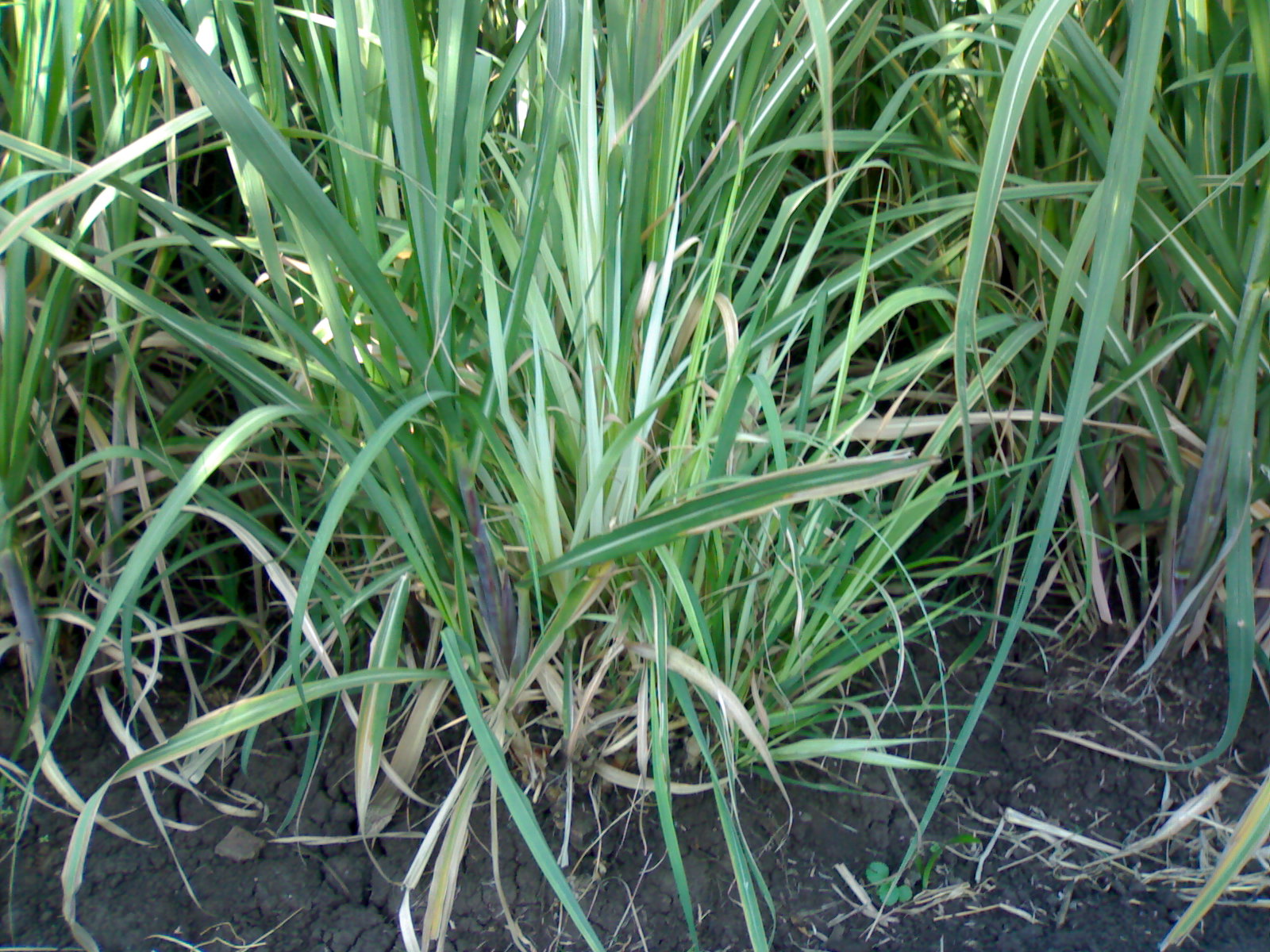
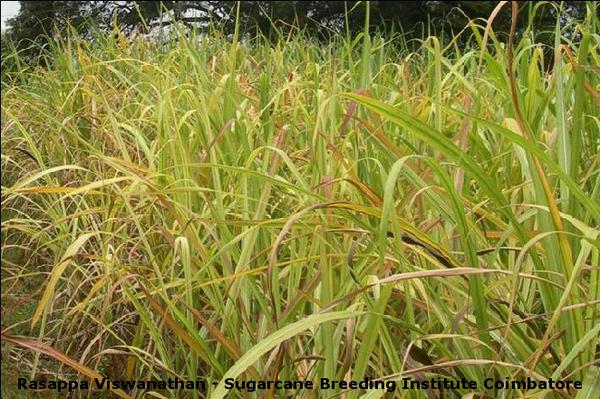
The disease is characterized by proliferation of vegetative buds from the base of the cane giving rise to crowded bunch of tillers bearing narrow leaves. The tillers bear pale yellow to completely chlorotic leaves. Cane formation rarely takes place in affected clumps and if formed the canes are thin with short internodes

This Website is Designed and Developed by Team © FarmEaz (A Student Group of DYPIEMR, Pune)